
Clément Dupont
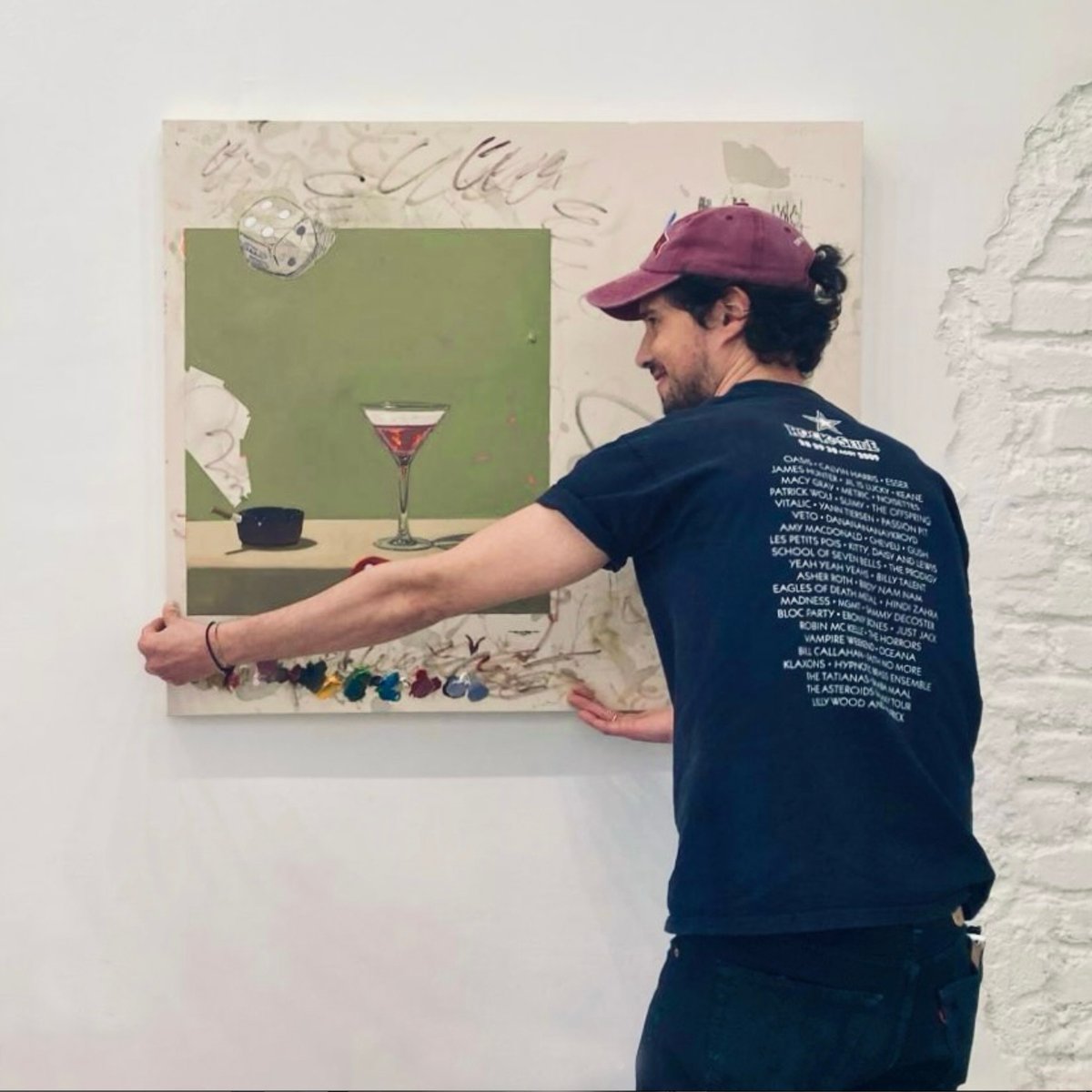
My painting practice originates in what I call the pictorial off-screen. It is backstage, in the wings of the practice, that I draw my motifs — gestures and tools diverted from their utilitarian functions so that they can be looked at again, differently.
By fixing the memory of making — masking tape, dried paint — I paint what the process summons, while acknowledging the support and its implications.
The pictorial grammar I deploy diverts the remains of the practice toward new statuses. They give rise to new forms in compositions that speak to one another, where each painting calls forth the next. These refer to the memory of the act of painting, endlessly under construction. Masking tape, for instance, is used both for its usual properties and function of delimitation, and for its formal qualities, close to drapery.
These elements — pictorial artefacts — once decontextualised, allow me to question the limits of painting: where it begins, and where it might stop.
From these motifs, representation also becomes a central question. The relationship to image and to pictoriality is staged on the surface of the canvas, in a technical cohabitation between academic figuration and printed screen.
The materiality of paint and of the image is staged through themes such as the still life. These two ways of rendering an image give rise to resonances and dissonances that I play with in my compositions.
Figuration, creating a space within the space, cohabits with the screen, pointing directly to a flatness of both image and support.
This same screen, used for serial reproduction, takes on pictorial qualities that make it singular.
The matter of paint in the pictorial sense, and the matter of the image evoked by the screen, mix in compositions that are at once classical and graphic, playing with the codes between these different fields to arrive at new formal propositions.
The search for autonomy of pictorial elements takes shape through deliberate shifts across different visual fields. These slippages or diversions open doors to new artistic practices, such as the exploration of typography. This is how my stapler becomes a writing instrument — used both to stretch my canvases onto their frames and to write, constraining the search for letterforms through the conditions induced by the object.